Walking the South West Coast Path in Stages: Why 630 Miles Feels Impossible (And Why It Isn’t)
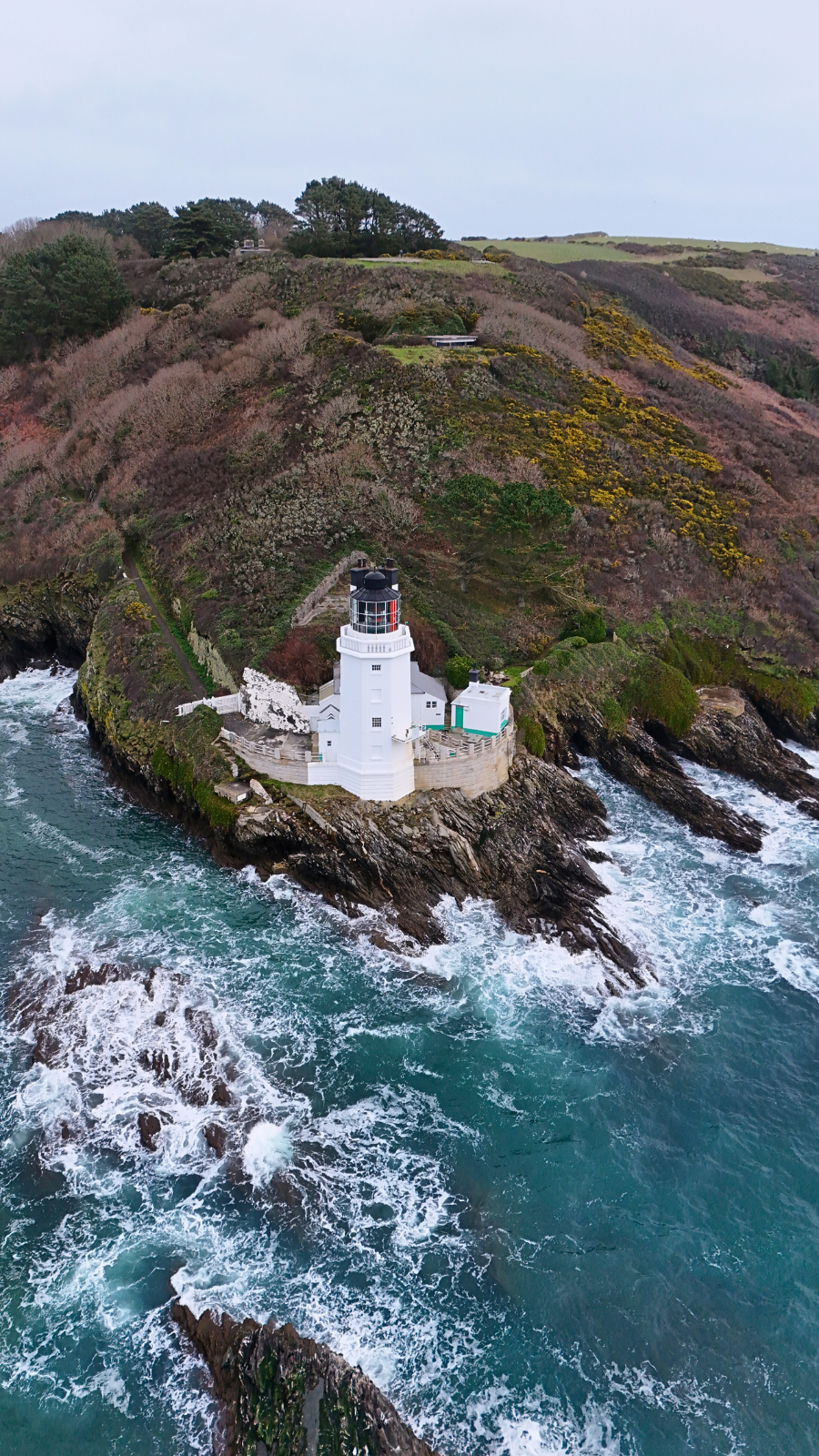
For anyone considering walking the South West Coast Path whether you’re planning a full thru-hike or simply curious about taking on sections this is for you.
The South West Coast Path stretches for 630 miles across four counties. Cornwall, Devon, Dorset and Somerset. On paper, it sounds heroic. In reality, it can feel completely unachievable.
When you first look at a South West Coast Path map and trace that line from Minehead to Poole, the question that naturally follows is: how long is the South West Coast Path and how on earth do normal people actually walk it?
Because 630 miles isn’t just a number. It’s elevation, ferry crossings, accommodation logistics, cost, time off work, weather and energy. And that’s before you’ve even started.
The Reality of the Terrain
One of the biggest misconceptions about walking the South West Coast Path is that it’s consistently dramatic and relentlessly difficult. The truth is more nuanced.
There are full days along certain South West Coast Path sections that are surprisingly flat. Long, steady stretches where you can move rhythmically and cover good ground.
And then there are days like the climb out of Trebarwith Strand above the Port William pub, where you are practically scrambling upward and questioning every life decision that brought you there.
The stretch from Port Isaac to Port Quin is brutal. Short, sharp, relentless undulation.
Other sections, particularly parts of South Devon, include road walking or gentler gradients that feel almost anticlimactic after the Cornish cliffs.
The terrain changes constantly. That’s part of its character. But it also means that difficulty isn’t a single answer. It depends entirely on which South West Coast Path stages you’re tackling.
The Financial Reality Nobody Talks About
This is where the scale of walking the South West Coast Path becomes uncomfortable.
The narrative made popular by The Salt Path suggested that you could walk it with very little money. That idea resonated with a lot of people. It made the path feel accessible.
But being out there regularly, I can say this honestly. It is extremely difficult to walk the South West Coast Path with no money.
Shops are sparse in certain stretches. Wild camping isn’t as simple or as discreet as people imagine. Many villages along the route are beautiful and priced accordingly.
If you are walking it in one go, you are looking at accommodation costs, ferry crossings, some of which are seasonal, food logistics, gear investment and transport to and from stages.
The path moves through places built around tourism. That reality shapes the experience. And for many people, that financial question is the real barrier.
The Mental Weight of 630 Miles
Looking at the entire South West Coast Path as one continuous line can feel overwhelming.
It crosses four counties. If you’re not walking it in one go, how do you realistically complete it? Ten miles at a time? Twenty? Do you base yourself in one county and tick off sections?
The sheer scale makes it feel like something reserved for the ultra fit, ultra committed or financially backed.
But this is where mindset shifts everything.
Why Walking the South West Coast Path in Stages Changes Everything
The phrase “South West Coast Path stages” is rising in search for a reason. Because breaking it down changes the psychology entirely.
Instead of 630 miles, it becomes Minehead to Porlock, Port Isaac to Port Quin, Mousehole to St Michael’s Mount, Clovelly to Hartland. Individual, self-contained journeys.
When you treat it as structured South West Coast Path sections, you remove the intimidation factor. You allow yourself to be selective. You walk the dramatic bits first, or the quiet bits, or the convenient bits.
You stop trying to conquer it. You start exploring it.
And suddenly it becomes achievable.
The Direction Problem Nobody Mentions
There’s another mental factor people rarely discuss.
If you’re walking the South West Coast Path in one direction for weeks, you are often walking with land on one side and sea on the other. Constantly.
You’re not walking toward a horizon. You’re tracing a coastline.
For some people, that repetition becomes disorientating. Almost claustrophobic in its consistency.
Breaking the walk into stages reduces that fatigue. It lets you reset between sections rather than forcing continuous forward motion.
My Approach
I am documenting the South West Coast Path in stages not as a speed challenge, not as a purity test, but as a long term structured project.
Real conditions. Real terrain. Real logistics.
Not romanticised. Not dramatized. Not simplified.
Just honest.
Final Thought
The South West Coast Path is not easy. It is not cheap. It is not logistically simple.
But it is possible.
And it becomes far more achievable when you stop looking at 630 miles and start looking at the next section.
The next stage. The next ferry. The next climb. The next village.
If you’re interested in following my structured journey walking the South West Coast Path section here.